
Kitchen renovation costs in Vancouver can range from $5,000 for a cabinet refacing to over $100,000 for a full luxury remodel, but for most homeowners, the real frustration isn’t the price. It’s the lack of clear answers.
One contractor says $25K. Another says $60K. A third tells you, “it depends.” Meanwhile, you’re left wondering whether you’re about to make a smart investment or a very expensive mistake.
Our guide breaks down the average kitchen renovation cost Vancouver homeowners are actually paying in 2026, what really drives those costs, and money saving strategies to help you get real value from a significant investment. Whether you’re considering a quick refresh or a full transformation, understanding your options is the difference between making a smart decision and making costly mistakes.
At 180 Kitchens, we’ve completed hundreds of kitchen renovations across Vancouver. Here’s what we’ve learned.
Key Takeaways
- The average kitchen renovation cost in Vancouver in 2026 ranges from $5,000 for cabinet refacing to $100,000+ for a full luxury remodel
- Most Vancouver homeowners spend $25,000–$50,000 for a mid-range full renovation
- Cabinet refacing costs 30–50% less than full cabinet replacement: it’s the most cost-effective option when your cabinet boxes are structurally sound
- Hybrid renovations ($12,000–$25,000) deliver 80–90% of the visual impact of a full remodel at a significantly lower cost
- Vancouver labour costs run 20–30% above the national average: factor this into any online estimate you find
- Always budget a 15–20% contingency for hidden issues, especially in older Vancouver homes
What Affects the Cost of a Kitchen Renovation in Vancouver?
No two homes in Vancouver are exactly alike, and that’s why renovation quotes can vary so widely.
While prices can feel unpredictable at first, most kitchen renovation costs come down to a handful of key factors. Understanding these early can help you avoid surprises and make more confident decisions about where to invest and where to save.
Kitchen Size
The size of your kitchen naturally plays a role in overall cost. Larger kitchens require more materials, more labour, and more installation time, which increases the total project cost.
That said, smaller kitchens, especially common in Vancouver condos or older East Vancouver homes, aren’t always inexpensive by default. Limited space can sometimes make installations more complex, depending on layout and access.
Scope of Work
The scope of your project is one of the biggest drivers of cost, and often the most misunderstood.
There’s a significant difference between a cosmetic upgrade and a full structural renovation. Updating cabinet doors, finishes, or countertops can dramatically change the look of your kitchen without major construction. On the other hand, moving walls, relocating plumbing, or reworking electrical systems quickly increases both cost and timeline.
This is where many homeowners unintentionally overspend, by committing to more work than they actually need.
Materials Selected
Material choices can shift your budget more than almost any other factor.
For example, choosing laminate countertops instead of quartz, or MDF cabinet doors instead of solid wood, can create a noticeable price difference. But higher cost doesn’t always mean better value.
The key is to balance durability, appearance, and budget based on how you use your kitchen day to day, not just what looks best in a showroom.
Labour Costs
Labour costs in Vancouver are among the highest in Canada, typically running 20–30% above the national average.
This is largely due to strong demand for skilled trades and the complexity of many renovation projects in the region. Projects that involve multiple trades, such as electricians, plumbers, and tile installers, can see costs rise quickly.
Because of this, availability can be limited, and experienced contractors often book out in advance. This makes early planning especially important when budgeting for a renovation.
Age and Condition of Your Home
The age and condition of your home can have a significant impact on your renovation budget, especially in older Vancouver properties.
Character homes and heritage houses may require upgrades to wiring, plumbing, or structural elements once work begins. These issues are often hidden behind walls and only discovered during the renovation process.
Because of this, it’s important to plan for contingencies rather than assuming everything will go exactly as expected.
Cabinet Options
One of the most important decisions you’ll make is whether to keep or replace your existing cabinet boxes.
If the structure is still in good condition, refacing, replacing doors, drawer fronts, and cabinet hardware while keeping the existing boxes, can be a much more cost-effective option than full replacement.
If not, replacing cabinets entirely may be the better long-term solution. This decision alone can significantly impact your overall budget.
Permits and Vancouver Building Codes
Depending on the scope of your renovation, permits may be required under local building codes.
In Vancouver, permits are typically required for structural changes, as well as electrical and plumbing work. Cosmetic updates, such as cabinet refacing or replacing countertops, generally do not require permits.
Because requirements can vary based on the specifics of your project, it’s important to confirm early in the planning stage. For a full breakdown, see our guide on whether you need a permit to renovate your kitchen.
Condo Renovations
Kitchen renovations in condos come with additional layers of complexity.
Strata approvals, elevator booking fees, restricted working hours, and building-specific regulations all need to be factored into your plan. These constraints don’t just affect cost, they can also extend your project timeline if not accounted for early.
Kitchen Renovation Cost Ranges in Vancouver (2026)
Here are the typical kitchen renovation cost ranges homeowners can expect in Vancouver in 2026.
It’s important to remember that Metro Vancouver has some of the highest labour costs in Canada, which means pricing here is often higher than national averages and significantly different from US-based estimates you may find online.
| Renovation Type | Typical Cost Range | What’s Included |
| Cabinet Refacing | $5,000 – $12,000 | New doors, drawer fronts, updated cabinet finishes |
| Hybrid Kitchen Renovation | $12,000 – $25,000 | Refacing + selective cabinet replacement + countertops |
| Mid-Range Full Renovation | $25,000 – $50,000 | Full cabinet replacement, surfaces, finishes |
| Luxury Renovation | $50,000 – $100,000+ | Custom cabinetry, layout changes, premium materials |
Cabinet Refacing ($5,000–$12,000)
Cabinet refacing is the most cost-effective way to transform a kitchen, and for many homeowners, it’s also the most practical starting point.
Instead of removing your existing cabinets, the structure stays in place. The doors, drawer fronts, and cabinet hardware are replaced, and new vinyl is applied to the exterior of the existing cabinet boxes in your chosen finish, giving the kitchen, including upper cabinets and base cabinets, a completely refreshed appearance.
The result is often indistinguishable from a full renovation visually, but without the cost, mess, or downtime.
Most refacing projects are completed in just 2–5 days, which makes it especially appealing for homeowners who want a fast, low-disruption upgrade. This is also the most common choice among 180 Kitchens clients in Vancouver.
Hybrid Kitchen Renovations ($12,000–$25,000)
Hybrid renovations are quickly becoming the “sweet spot” for Vancouver homeowners.
This approach combines cabinet refacing with targeted upgrades where they matter most, such as replacing specific cabinets, upgrading countertops, or adding a backsplash.
The benefit is flexibility. You improve both the look and functionality of your kitchen without committing to a full tear-out.
For many homeowners, this option delivers 80–90% of the impact of a full renovation at a significantly lower cost. See our before and after hybrid kitchen gallery for examples.
Mid-Range Full Renovation ($25,000–$50,000)
A mid-range renovation typically involves a full removal of existing cabinets and a completely new kitchen build.
This level makes sense when:
- the layout needs to change
- existing cabinets are damaged or outdated
- or a full redesign is required for functionality
These projects usually include new cabinets, countertops, backsplash, and flooring.
Some homeowners also consider stock cabinet systems at this level, although installation complexity and customization limits often reduce the expected savings once labour is included.
Luxury Renovations ($50,000–$100,000+)
Luxury kitchen renovations represent a complete transformation of the space.
These projects typically include custom cabinets, high-end stone countertops, energy-efficient appliances chosen for both performance and energy efficiency, layout changes, and sometimes structural modifications.
While this level of renovation can significantly increase home value, especially in higher-end neighbourhoods, it is usually best suited for homeowners planning a long-term stay or undertaking a full home upgrade.
Budget Breakdown for a Small Kitchen Remodel in Vancouver: What Are You Actually Paying For?
Even within the same renovation tier, two kitchens can end up with very different final prices.
Why? Because the total cost isn’t just about the type of renovation. It’s about how your budget is distributed across materials, labour, and the level of work involved.
Understanding where your money actually goes is what allows you to control costs without sacrificing results.
Cabinets
Cabinets are the single biggest cost driver in most kitchen renovations, often accounting for 40–50% of the total budget.
As a general benchmark:
- Stock cabinets typically range from $5,000 to $15,000
- Custom cabinetry can range from $30,000 to $60,000+ depending on materials and complexity
This is also where one of the most important decisions comes into play: whether to replace your cabinets entirely or keep the existing structure and reface them.
Cabinet refacing in Vancouver typically costs 30–50% less than full replacement, a meaningful way to save money without sacrificing the finished result. And if your kitchen cabinets are still in good condition and your layout works, the visual result is often comparable to a full renovation, without the added cost or disruption.
Countertops
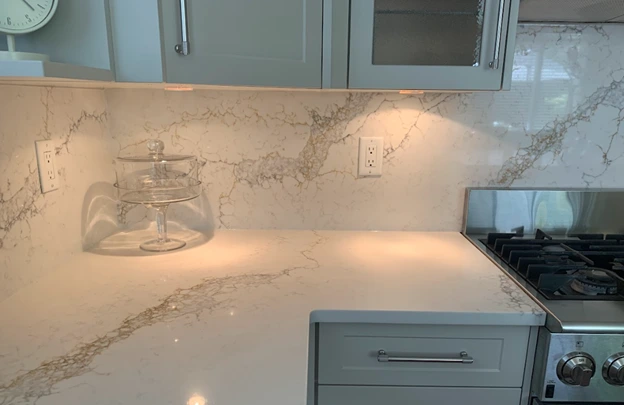
Countertops are usually the second-largest cost variable and one of the most visible elements in your kitchen.
Countertop material makes a significant difference to both the look and the cost:
- Laminate: $20–$50 per sq. ft.
- Quartz countertops: $50–$100 (most popular for durability and low maintenance)
- Granite countertop: $60–$150 depending on the slab
While it’s easy to focus on appearance, it’s just as important to choose a surface that fits how you use your kitchen day to day. For a full breakdown of materials and what works best in Vancouver homes, visit our kitchen countertops in Vancouver page.
Backsplash
The backsplash is one of the few areas where relatively small investments can create a noticeable visual impact.
Ceramic tile is typically the most budget-friendly option, while glass, mosaic, or natural stone can add more character at a higher price point. The final cost depends on the tile material selected, the complexity of the pattern or layout, and the specific tools and products required for installation — which can vary significantly from project to project.
Because of its smaller surface area, this is often where homeowners can afford to be a bit more creative without significantly affecting the overall budget. Explore our kitchen backsplash options in Vancouver for ideas and pricing.
Labour
Labour typically accounts for 20–35% of your total renovation cost in Vancouver.
Where your costs land within that range depends largely on the scope of your project. Renovations that involve demolition, layout changes, or multiple trades tend to be more expensive and less predictable.
On the other hand, projects that keep the existing layout and minimise trades work are usually more efficient in both cost and timeline. In many cases, choosing an approach that simplifies the work, such as cabinet refacing, can significantly reduce labour requirements without compromising the final result.
Permits
Permit costs are relatively small compared to other parts of your budget, but they still need to be accounted for.
In Vancouver, most kitchen renovation permits fall in the $500 to $3,000 range per permit, depending on the scope of work. While this isn’t usually a major cost driver, it can affect your overall timeline, especially if approvals are required before work begins.
Factoring permits into your plan early helps avoid delays and keeps your project moving smoothly once construction starts.
Cabinet Refacing vs Full Replacement — Which Makes More Sense in Vancouver?
This is one of the most common questions homeowners ask, and it’s usually where the biggest cost differences come from.
In Vancouver, many homeowners initially assume they need a full kitchen renovation. But in reality, that’s not always the case.
If your kitchen layout already works and your cabinets are still structurally sound, replacing everything is often unnecessary. In those situations, cabinet refacing can deliver the same visual transformation, without the added cost, time, and disruption of a full rebuild.
The key is understanding which situation you’re in.
When Refacing Makes Sense
Refacing is often the right choice when your kitchen doesn’t need to be rebuilt—just refreshed.
- Your cabinet boxes are in good condition
If the structure is solid, there’s no real advantage to replacing it. Refacing allows you to upgrade the appearance while keeping what already works. - You’re happy with your current layout
Layout changes are one of the biggest cost drivers in any renovation. If your kitchen functions well, keeping the same layout avoids expensive plumbing, gas, and electrical work.
In these cases, refacing offers a way to achieve a modern, functional kitchen at a significantly lower cost, often with a much faster turnaround. It’s one of the most effective ways to improve both appearance and property value without committing to a full rebuild.
When Full Replacement Makes Sense
There are situations where a full replacement is the better long-term decision.
- You want to change the layout
If your current kitchen doesn’t function well, a full renovation allows you to redesign the space from the ground up. - Your cabinets are damaged or outdated structurally
Warped boxes, water damage, or poor construction can make refacing impractical. In these cases, replacing cabinets entirely ensures durability and long-term performance.
In practice, most homeowners fall somewhere in between, which is why hybrid approaches have become increasingly popular. By combining refacing with targeted cabinet replacement, you can improve both the look and functionality of your kitchen without committing to a full remodel.
If you’re not sure which direction makes the most sense, seeing real examples can help clarify what’s possible. Browse our cabinet refacing before and after gallery or learn more about cabinet refacing in Vancouver.
How to Get the Most Value From Your Vancouver Kitchen Renovation Budget
After working on hundreds of kitchens across Vancouver, one thing becomes clear: staying on budget isn’t about cutting corners, it’s about making the right decisions early.
The difference between a renovation that feels worth it and one that feels overpriced usually comes down to how strategically the budget is allocated.
Here’s the practical advice we give homeowners before they get started:
Prioritise Key Areas
Not every part of your kitchen delivers the same impact.
Cabinetry and countertops are the most visible elements in the space, and the ones people notice first. Focusing your budget here tends to produce the biggest transformation, both visually and in terms of resale value and perceived quality.
Other elements can be upgraded more selectively without affecting the overall result.
Avoid Moving Plumbing, Gas Lines, and Electrical
One of the fastest ways to increase your renovation cost is to change your layout.
Relocating plumbing, gas lines, or electrical fixtures adds complexity, requires multiple trades, and often triggers permit requirements. These changes can significantly increase both your budget and your timeline.
If your current layout works, keeping it in place is one of the simplest ways to control costs without sacrificing results.
Work With a Kitchen Specialist, Not Just a General Contractor
There’s a noticeable difference between working with a general contractor and working with a kitchen specialist.
Specialists tend to have more streamlined processes, more accurate quoting, and stronger relationships with suppliers. Because they focus on kitchens specifically, they’re often better equipped to suggest cost-effective alternatives that still achieve the desired outcome.
This is also where many homeowners discover options, like refacing or hybrid renovations, that aren’t always presented in a traditional full-remodel approach.
Consider Bringing in a Designer
A well-designed kitchen isn’t just about appearance, it’s about how the space functions day to day.
Working with a designer early in the process can help you avoid layout mistakes, improve flow, and make better use of your space. In many cases, this prevents costly changes later on.
Many kitchen specialists, including 180 Kitchens, include design consultation as part of their process, which makes it easier to plan with confidence from the start.
Budget for Unexpected Expenses
Even with careful planning, renovations can uncover hidden issues, especially in older homes.
Water damage, outdated wiring, or structural concerns often only become visible once work begins. These are some of the most common reasons budgets go off track.
Setting aside a 15–20% contingency as part of a realistic budget helps absorb unexpected costs without derailing the project. This is one of the most commonly overlooked money saving strategies, because avoiding mid-project scrambles is far less stressful than finding extra funds under pressure.
Consider a Hybrid Approach
Not every kitchen needs to be rebuilt from scratch.
A hybrid approach, combining cabinet refacing with selective upgrades, can often deliver the best balance between cost and transformation. It allows you to improve both the look and functionality of your kitchen without paying for a full replacement where it isn’t needed.
This is particularly effective in condo kitchens or projects where budget constraints are a factor.
Timing Matters
Timing can also influence your renovation cost.
Slower periods, typically from January to March, can offer more flexibility in scheduling and, in some cases, better pricing. Material lead times may also be shorter, which can help keep your project on track.
Not sure which approach fits your budget? Use our free instant estimate tool to get a ballpark figure in minutes — no obligation required.
Why Vancouver Homeowners Choose 180 Kitchens
With over 20 years of local expertise in Vancouver and surrounding areas, we’ve built a reputation for delivering high-quality results at a price point that makes sense. We specialise in cabinet refacing and hybrid renovations, the options that give Vancouver homeowners the most value for their budget without the disruption of a full remodel.
For many of our clients, that means achieving the look of a brand new kitchen without the cost, timeline, or stress of a full renovation.
Our quoting process is transparent and detailed from the start. No hidden costs, no vague estimates, just a clear understanding of what your project involves and what it will cost. We work with trusted local suppliers, and our team understands the specific requirements of Vancouver homes, from East Vancouver character houses to condo kitchen renovations with strata restrictions. We’re proud members of HAVAN and the BBB, and a certified installer for Home Depot.
We serve homeowners across Metro Vancouver, including Surrey, Burnaby, North Vancouver, West Vancouver, Richmond, Coquitlam, Langley, and Abbotsford.
If you’re considering a kitchen upgrade, the next step is simply getting clarity on your options. Book a free in-home consultation — one of our design specialists will come to you, measure your kitchen, and provide a detailed quote at no charge.
Frequently Asked Questions
What is the average cost of a kitchen renovation in Vancouver?
The average kitchen renovation cost in Vancouver typically falls between $25,000 and $50,000 for a mid-range project. Smaller updates like cabinet refacing can start around $5,000, while high-end renovations with custom cabinetry and layout changes can exceed $100,000. The final cost depends on the size of your kitchen, materials selected, and the scope of work.
How much do kitchen cabinets cost in Vancouver?
Kitchen cabinets are often the largest expense in a renovation, typically accounting for 40–50% of the total budget. Stock cabinets can range from $5,000 to $15,000, while custom cabinetry can cost $30,000 to $60,000 or more. Cabinet refacing is a more cost-effective alternative, usually costing 30–50% less than full replacement.
How much does a minor kitchen renovation cost in Vancouver?
A minor kitchen remodel in Vancouver typically ranges from $10,000 to $20,000, depending on the scope of work and materials chosen. Cabinet refacing is the most affordable option and can be completed from as little as $5,000.
Is cabinet refacing more affordable than replacing cabinets in Vancouver?
Yes, cabinet refacing can cost 30–50% less than full cabinet replacement, making it a budget-friendly option for many homeowners. If your cabinet boxes are in good condition and you’re happy with the same layout, refacing is almost always the better financial choice.
Do I need a permit for a kitchen renovation in Vancouver?
Permits are required for structural changes, electrical work, and plumbing modifications under Vancouver building codes. Building permits in Vancouver typically cost between $500 and $3,000 depending on the project’s scope. Cosmetic updates such as cabinet refacing, countertop upgrades, and backsplash installation typically do not require permits. Always check with your local municipality to ensure compliance.
How long does a kitchen renovation take in Vancouver?
It depends on the type of renovation. Cabinet refacing typically takes 2–5 days. A hybrid renovation usually takes 1–2 weeks. A full kitchen remodel can take anywhere from 4 to 12 weeks depending on the project’s scope, material lead times, and whether permits are required. For a detailed breakdown, see our kitchen renovation timeline guide.
What is the ROI on a kitchen renovation in Vancouver?
A well-executed kitchen renovation can yield a return on investment of 70–80%, making it one of the most valuable home renovation projects you can undertake. Cabinet refacing and hybrid renovations tend to offer the highest ROI because of their lower upfront cost relative to the visual transformation achieved.
Can I get a cost estimate for my kitchen renovation in Vancouver before committing?
The most accurate way to get a quote is through an in-home measurement and consultation, which 180 Kitchens offers for free. Alternatively, use our online estimate tool to get a quick ballpark based on your kitchen size and renovation goals.
Ready to Find Out What Your Dream Kitchen Could Look Like?
Kitchen renovation costs in Vancouver can vary widely, but with the right approach, you don’t need to overspend to get a result you’ll love.
Whether you’re considering a budget-friendly cabinet reface, a popular hybrid renovation, or a full remodel, we’ll help you understand your options clearly and choose the one that makes the most sense for your home and your budget.
At 180 Kitchens, our goal is simple: help you achieve a kitchen that feels updated, functional, and built to last, a kitchen renovation project you’ll be confident about, without unnecessary cost or disruption. Explore our kitchen renovations services.
If you’re ready to take the next step, you can get a free instant estimate or book a free in-home consultation today. We’ll walk you through what’s possible, what it will cost, and how to move forward with confidence.