
Here’s a truth that surprises most homeowners: you probably don’t need new cabinets.
When your kitchen feels dated, the instinct is to rip everything out and start fresh. But there are actually three distinct paths to a transformed kitchen, and the most expensive one isn’t always the best.
The challenge? These approaches overlap in confusing ways. Painting sounds cheap but might not last. Refacing sounds unfamiliar. Replacement sounds thorough but costs a fortune.
By the end of this guide, you’ll have a clear framework for deciding between cabinet painting, cabinet refacing, and full replacement, based on your budget, timeline, and how long you plan to stay in your home. Whether you’re in Vancouver, Edmonton, or Calgary, let’s break it down.
Understanding Your Three Kitchen Renovation Options at a Glance
Before diving deep, here’s a quick comparison. Consider this your TL;DR:
| Option | Average Cost | Time to Complete | Best For |
| Cabinet Painting | $1,500 – $5,000 | 3–7 days | Tight budget, structurally sound cabinets |
| Cabinet Refacing | $5,000 – $12,000 | 1–3 days | Good cabinet structure, want new look + hardware |
| Full Replacement | $15,000 – $50,000+ | 4–10 weeks | Layout change needed or cabinets beyond repair |
Each option assumes your cabinets are in different states of need. A kitchen with water-damaged boxes needs different treatment than one with perfectly solid structure but outdated oak doors from 1995.
Let’s examine each option in detail so you can identify exactly where your kitchen falls.
What Is Cabinet Painting?
Cabinet painting is exactly what it sounds like: applying new paint or stain to your existing cabinet doors and boxes. But “just painting” is deceptively simple — professional results require significant preparation.
How It Works
Cabinet painting involves applying paint to existing doors, drawer fronts, and exposed frames, which updates the look without changing the cabinet structure. The surfaces are cleaned, sanded, primed, and painted.
Professional spray finishing is highly recommended for painting to avoid brushstrokes and premature peeling. Brush painting is cheaper but rarely achieves the same quality. The process usually takes 3–7 days, though some of that time is curing. Your kitchen may be partially usable during this period, depending on the painter’s approach.
Cost Range
Professional cabinet painting typically runs $1,000–$5,000, depending on kitchen size and the number of cabinets. DIY painting costs significantly less in materials, but the quality difference is substantial. Brush marks, drips, and uneven coverage are common DIY pitfalls, and once paint starts peeling, you’re back to square one.
Pros of Cabinet Painting
- Lowest cost option — by a significant margin
- No disruption to kitchen layout — everything stays where it is
- Ideal for changing colours — since white cabinets brighten, dark cabinets add drama, and you can completely shift your kitchen’s mood
- Fast turnaround — typically under a week
Cons of Cabinet Painting
- Doesn’t address worn hardware, hinges, or drawer fronts — you’re keeping the same handles, the same hinges, the same everything except the colour
- Paint can chip, peel, or yellow over time — especially in high-traffic areas around handles and near the stove
- Doesn’t change door style or profile — flat-panel doors stay flat; raised-panel stays raised
- Not a long-term solution for older cabinets — if your cabinets are 20+ years old, paint is a band-aid
When Painting Cabinets Makes Sense
Cabinet painting is the right choice when budget is your primary constraint, your cabinets are in excellent structural condition, and you’re planning to sell within 1–2 years. It’s a cosmetic refresh, not a transformation, and that’s fine if cosmetic is all you need.
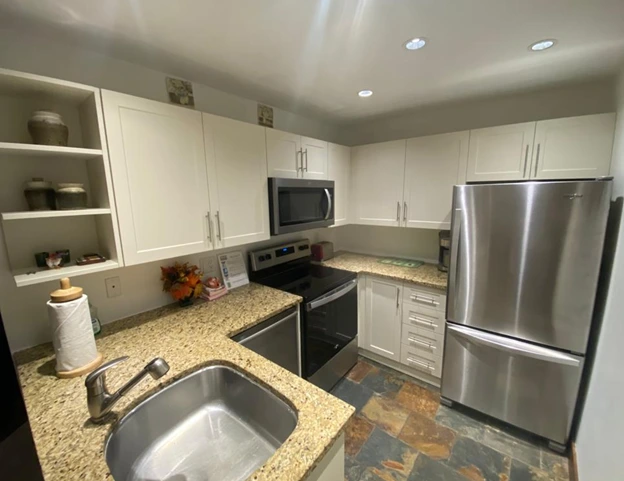
What Is Cabinet Refacing?
Cabinet refacing sits in the middle ground between painting and full cabinet replacement, and it’s the option most homeowners don’t know exists.
How It Works
When professionals reface your cabinets, they replace all the exterior parts: new doors, new drawer fronts, new hardware, and a durable vinyl or veneer applied to the existing cabinet boxes. Your upper cabinets and base cabinets get completely refreshed while the solid structural boxes underneath remain in place.
The key distinction from painting: refacing gives you entirely new doors. You’re not recoating old raised-panel oak but you’re replacing it with shaker-style white, or slab-front grey, or whatever style fits your vision.
Cost Range
Cabinet refacing typically runs $5,000–$12,000 across Vancouver, Edmonton, and Calgary, depending on kitchen size, door materials, and whether you’re adding extras like soft-close hinges or pull-out organizers. Vancouver’s labour costs tend to run slightly higher, but all three markets fall within this range.
Pros of Cabinet Refacing
- 30–50% less than full replacement — major savings without compromising on looks
- Completely new aesthetic — including door style, profile, and colour
- New hardware included — handles, knobs, hinges all get upgraded
- Completed in as little as 1–3 days — minimal disruption to your daily life
- Environmentally friendly — no demolition waste heading to the landfill
- Works for both residential and commercial spaces — same approach scales up
Cons of Cabinet Refacing
- Cabinet boxes must be structurally sound — if the boxes are water-damaged, warped, or falling apart, refacing won’t work, but the boxes that aren’t in good shape can be replaced if needed.
- Can’t change kitchen layout — your cabinets stay where they are
- Not suitable if boxes are beyond repair — obvious water damage, mould, or severe warping means you need a replacement
When Refacing Cabinets Makes Sense
Refacing is the right choice when your layout already works, your cabinet boxes are in good condition, and you want a significant visual transformation without the cost or timeline of a full renovation. For most homeowners with kitchens built in the last 30–40 years, this is the sweet spot.
See our gallery for before and after results of our cabinet refacing projects.
What Is Full Cabinet Replacement?
Full replacement is the nuclear option: demolish everything, start fresh, build new.
How It Works
Full cabinet replacement involves removing all existing cabinets (boxes, doors, hardware — everything), often including countertops and backsplash. New cabinet boxes are installed, followed by new doors, new hardware, and typically new countertops to match. If the layout changes, you may be looking at plumbing and electrical work as well.
The process takes 4–10 weeks depending on complexity, and your kitchen will be largely unusable during this period.
Cost Range
The cost varies dramatically based on cabinet quality:
- Stock cabinets: $15,000–$25,000
- Semi-custom cabinets: $25,000–$45,000
- Custom cabinets: $30,000–$60,000+
These numbers typically include installation but not countertops, backsplash, or any plumbing/electrical modifications. Don’t forget the costs of: demolition, disposal fees, cleanup, and the labor involved in ripping out old cabinetry, all add to the final bill. A full kitchen gut-and-rebuild can easily exceed $80,000 in major Canadian markets like Vancouver, Edmonton, and Calgary.
Pros of Full Cabinet Replacement
- Complete design freedom — nothing constrains you
- Layout can be changed — add an island, remove a wall, reconfigure the workflow
- New everything — cabinets, hardware, internal fittings, all fresh
- Best option for severely damaged cabinets — when boxes are beyond saving, this is the only path
Cons of Full Cabinet Replacement
- Most expensive option by far — often 3–5x the cost of refacing
- Longest timeline — weeks, not days
- Most disruptive — your kitchen will be a construction zone
- Often triggers permits — especially if layout changes involve plumbing or electrical relocations
When Replacing Cabinets Makes Sense
Full replacement is the right choice when you need to change your kitchen’s current layout (adding an island, moving the sink, removing a wall), when your cabinet boxes are structurally unsound or damaged beyond repair, or when you’re undertaking a major whole-home renovation anyway.
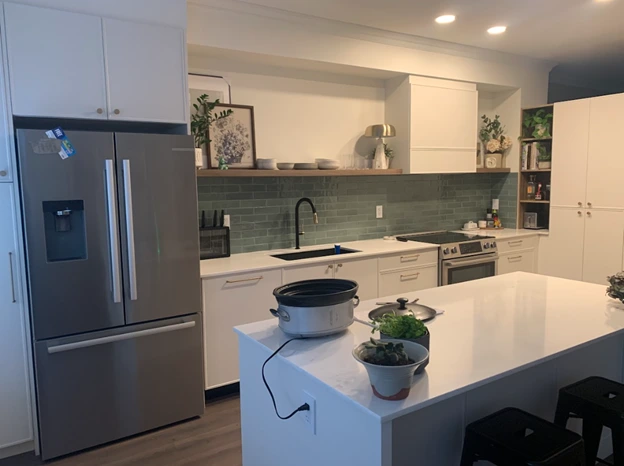
Cabinet Refacing vs. Painting — Which Is Better?
This is the showdown between the two most affordable options. Both can transform your kitchen’s appearance, but they deliver fundamentally different outcomes.
The Core Difference
Painting changes your cabinet colour. That’s it. Same doors, same hardware, same hinges, same profile — just a different colour.
Refacing changes your cabinet colour and your door style and your hardware and your hinges. It’s not a refresh; it’s a replacement of everything visible.
The Price Gap
Painting is typically 60-80% less expensive than refacing upfront. A $1,500 paint job versus $8,000 for refacing is a significant difference. But that gap narrows when you factor in how long each solution lasts and what you actually get for your money.
Durability Comparison
Professional cabinet refacing typically lasts 15–20 years with normal use. The new doors are manufactured to modern standards, and the veneer on the boxes is designed to withstand kitchen environments.
Professional cabinet painting lasts 5–7 years before showing significant wear — longer if you’re careful, shorter in high-traffic households. Around handles, near the stove, and on frequently-touched surfaces, paint degrades noticeably faster than factory finishes.
Cost vs. Value
Painting is significantly cheaper than refacing and ideal for changing colors. But consider the value equation: refacing costs 2–4x more than painting but delivers a transformed kitchen that lasts 2–3x longer. On a per-year basis, refacing often works out cheaper — and you get a dramatically better result.
The Question to Ask Yourself
Do you want a colour change or a transformation?
If your answer is “I just want these honey oak cabinets to be white” and your cabinets are in perfect condition and you’re selling in a year — paint.
If your answer is “I want my kitchen to look completely different” and you’re planning to stay 5+ years and you want to stop looking at those dated raised-panel doors — reface.
Cabinet Refacing vs. Replacing — Which Is Better?
Reface or replace? This is the most-searched comparison, and for good reason. It’s where the biggest money decisions happen. Cabinet refacing involves replacing the cabinet doors and drawer fronts while keeping the existing boxes intact, making it a more affordable option compared to full cabinet replacement.
The Cost Argument
The cost of replacing cabinets is significantly higher than refacing, as it involves additional expenses such as demolition, cleanup, and labor for installation. Refacing your current cabinets saves you 30–50% compared to full replacement. On a $40,000 replacement job, that’s $12,000–$20,000 back in your pocket. That’s not spare change — that’s a family vacation, a car down payment, or simply money not borrowed.
The Timeline Argument
Cabinet refacing can typically be completed in just 1-3 days, making it a quicker option compared to cabinet replacement, which may take several weeks.
With refacing, you might be without your sink for an afternoon. With a replacement, you’re eating takeout for a month and washing dishes in the bathroom.
The Disruption Argument
This matters more than people expect. A full kitchen renovation means contractors in your home for weeks with dust, noise, and the stress of living in a construction zone. No morning coffee routine, no family dinners.
Refacing? The crew arrives, works efficiently, and leaves. Your kitchen is back to normal before the week is out.
The Environmental Argument
Cabinet replacement sends your old cabinets to the landfill — hundreds of pounds of wood, composite, and hardware. Refacing preserves those structurally sound boxes and only replaces what needs replacing. For environmentally conscious homeowners, this isn’t a small consideration.
The ROI Argument
Kitchen renovations do increase home value — but the return depends heavily on what you spend. Overspending on a full replacement in a mid-range neighbourhood doesn’t always pay back at resale. Refacing delivers a fresh, modern kitchen at a price point that makes financial sense for more homes and more markets.
Two Real Scenarios
Scenario A: Homeowner with solid cabinets in a layout that works. Wants a modern look. Budget-conscious but not broke.
Answer: Refacing wins, every time. There’s no compelling reason to spend 3x more for a result that won’t be 3x better.
Scenario B: Homeowner wants to add an island, remove the wall between kitchen and dining room, and completely reconfigure the workflow.
Answer: Replacement necessary. You can’t reface your way to a new layout. When structural changes are needed, do the full job right.
If your decision is specifically between refacing and full replacement, we’ve written a dedicated deep-dive: Cabinet Refacing vs. Replacing: An In-Depth Analysis . It covers cost breakdowns, structural assessments, and ROI in much greater detail.
The Decision Framework — How to Choose the Right Option
Still unsure? Walk through this simple decision tree.
Step 1: Are your cabinet boxes structurally sound?
Open a few cabinet doors. Look at the boxes themselves, the part that attaches to the wall. Any water damage? Warping? Soft spots? Visible mould or mildew?
- If the boxes are damaged: Full replacement is likely necessary.
- If the boxes are solid: Continue to Step 2.
Step 2: Do you need to change the kitchen layout?
Are you happy with where everything is? Or do you need the fridge somewhere else, want to add an island, or plan to open up walls?
- If layout must change: Consider full replacement.
- If layout works: Continue to Step 3.
Step 3: What is your budget?
Be honest with yourself about what you can comfortably afford.
- Under $3,500: Cabinet painting is your option.
- $4,000–$12,000: Cabinet refacing delivers maximum transformation per dollar, a cost effective solution.
- $15,000+ and you want a complete overhaul: Full replacement makes sense if Steps 1 and 2 also pointed that direction.
Step 4: How long are you planning to stay in the home?
Your time horizon affects the value calculation.
- Less than 2 years: Painting or basic refacing of existing cabinetry— keep costs low, get the home market-ready, save money.
- 5+ years: Invest in refacing or replacement, depending on the above factors. You’ll enjoy the results for years.
How Much Does Each Renovation Option Cost in 2026?
Here’s what to expect across our service areas in Vancouver, Edmonton, and Calgary:
Cabinet Painting: $1,500–$5,000 for a typical Vancouver kitchen.
Cabinet Refacing: $5,000–$12,000 depending on kitchen size, door material, and features like soft-close hinges.
Full Replacement: $15,000–$50,000+ depending on cabinet quality. Factor another $5,000–$15,000 for countertops and backsplash if needed.
Condo considerations: Strata rules may affect renovation timelines, noise restrictions limit work hours, and elevator booking adds complexity. Longer projects (replacement) are more affected.
Read more about renovation costs:
How Much Does a Kitchen Renovation Cost in Vancouver
Calgary Kitchen Renovation Cost in 2026: What Homeowners Should Know
Why Most Homeowners Choose Cabinet Refacing
The numbers point toward refacing for most situations: Most kitchens built in the last 30–40 years have structurally sound cabinet boxes. The bones are good — it’s the exterior that’s dated.
This is true whether you’re in a Vancouver condo, an Edmonton bungalow, or a Calgary two-storey. Homeowners across all three cities are pragmatic about value. Spending $40,000+ when $8,000–$12,000 delivers a transformed kitchen doesn’t make financial sense for most households.
At 180 Kitchens, refacing and hybrid approaches are our specialty. We serve homeowners across Vancouver, Edmonton, and Calgary, with over 20 years of combined experience in cabinet refacing.
Learn more about our cabinet refacing services in Vancouver
Learn more about our cabinet refacing services in Edmonton
Learn more about our cabinet refacing services in Calgary
Frequently Asked Questions
Is cabinet refacing cheaper than replacing cabinets?
Yes — typically 30–50% less. On a kitchen that would cost $40,000 to replace, refacing usually runs $12,000–$18,000. The savings come from keeping your structurally sound cabinet boxes in place and only replacing the visible exterior components.
How long does the cabinet refacing process take compared to painting?
Cabinet refacing typically lasts 15–20 years because you’re installing new manufactured doors and durable veneers. Professional cabinet painting lasts 5–7 years before showing significant wear, particularly around high-touch areas like handles and near heat sources.
Can I reface really old cabinets?
Often, yes. Cabinet age matters less than cabinet condition. We’ve successfully refaced cabinets from the 1980s and earlier. The key question is whether the boxes are structurally sound — solid, level, and free from water damage or warping. A professional assessment can determine whether your specific cabinets are candidates for refacing.
Does cabinet refacing add value to your home?
Yes. A refaced kitchen presents as fresh and modern to potential buyers, which increases perceived home value. Because refacing costs less than replacement, you’re also more likely to recoup your investment at resale. Kitchens are consistently rated as one of the highest-ROI renovation projects, and refacing delivers that ROI at a lower price point.
Is it worth painting kitchen cabinets instead of replacing them?
Painting makes sense in specific situations: when budget is extremely tight, when cabinets are in excellent condition, and when you’re preparing to sell soon. For longer-term ownership or when you want a more dramatic transformation, refacing delivers better value over time.
How do I know if my cabinets are suitable for refacing?
The best way is a professional assessment, but you can do a preliminary check yourself. Open your cabinets and examine the boxes. Look for: water damage (staining, soft spots, warping), structural integrity (are they solidly attached and level?), and overall condition (do the shelves hold weight properly?). If the boxes are solid, refacing is likely an option. If you see damage, replacement may be necessary.
Which cabinet renovation option offers the best long-term value?
Cabinet refacing offers the best long-term value for most homeowners. While painting costs less upfront (typically 60-80% cheaper than refacing), it only lasts 5-7 years before showing wear. Refacing costs more initially but lasts 15-20 years, meaning your per-year cost is actually lower. Full replacement delivers the longest lifespan but at 3-5x the price of refacing, making it harder to recoup your investment at resale. For homeowners with structurally sound cabinets who plan to stay in their home for 5+ years, refacing hits the sweet spot: a completely transformed kitchen at a price point that makes financial sense.
Where can I find top-rated cabinet refacing services near me?
180 Kitchens serves homeowners across Greater Vancouver, Edmonton, and Calgary with over 20 years of combined experience in cabinet refacing. We’re HAVAN members, BBB-accredited, and an authorized Home Depot installer. Our team specializes in cabinet refacing and hybrid kitchen solutions, completing most projects in just 1-3 days with minimal disruption to your daily life. We offer free in-home consultations where we assess your cabinets and recommend the option that makes the most sense for your situation, whether that’s refacing, a hybrid approach, or in some cases, full replacement.
Ready to Transform Your Kitchen?
You’ve now got the complete picture: painting for tight budgets and short timelines, refacing for smart transformations that preserve what’s working, and replacement for situations that genuinely require starting fresh.
For most Vancouver, Edmonton, and Calgary homeowners, cabinet refacing delivers the best balance of cost, timeline, impact, and value. But your kitchen is unique, and the right choice depends on your specific situation.
The next step is simple: let us take a look. We’ll assess your cabinets, discuss your goals, and tell you honestly which option makes the most sense. No obligation, no pressure — just clarity.
Call 180 Kitchens to book your free in-home estimate in Vancouver, Edmonton, Calgary or surrounding areas.