
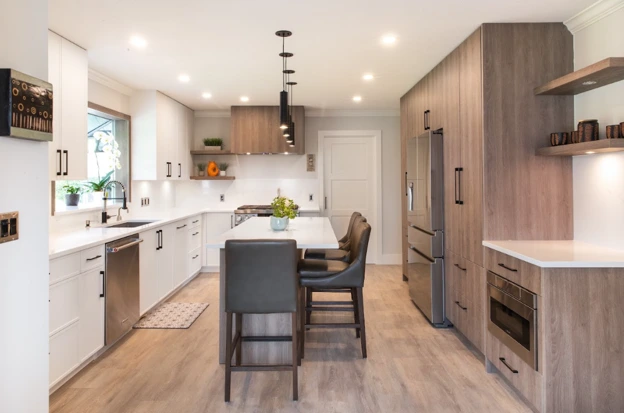
Your kitchen needs an update, but does that mean everything has to go?
Maybe the cabinet doors look dated, but the cabinets themselves are still in good condition. Or perhaps you like your current layout but wish you had more storage, better countertops, or a few modern features.
A full kitchen renovation isn’t always necessary to make those changes. With a hybrid kitchen renovation, you can keep the parts of your kitchen that still work, update the ones that don’t, and add new features where they’re needed.
It’s an approach worth considering if you want a noticeable transformation without starting from scratch.
So, what does a hybrid renovation actually involve, and how do you decide what stays and what goes? Let’s take a closer look.
What Is a Hybrid Kitchen Renovation?
A hybrid kitchen renovation combines existing kitchen elements with new ones. Instead of removing everything, you keep what’s in good condition and replace or modify the parts that need attention.
For example, you might keep your existing cabinet boxes, replace the doors and drawer fronts, install new countertops, and add a pantry cabinet for extra storage.
The idea is simple: keep what works, change what doesn’t.
You may also hear this approach described as a partial kitchen renovation or partial kitchen remodel. The terms are closely related, although the exact scope depends on what your kitchen needs.
Unlike a full kitchen renovation, which typically involves replacing most or all of the cabinetry, a hybrid renovation focuses on keeping what still works while making targeted improvements. That could mean refacing existing cabinets, adding a new pantry, converting cabinets into drawers, upgrading appliances, or making selected layout changes to improve how you use the space.
That flexibility is what makes the approach appealing. You don’t have to choose between changing a few cabinet handles and rebuilding your entire kitchen.
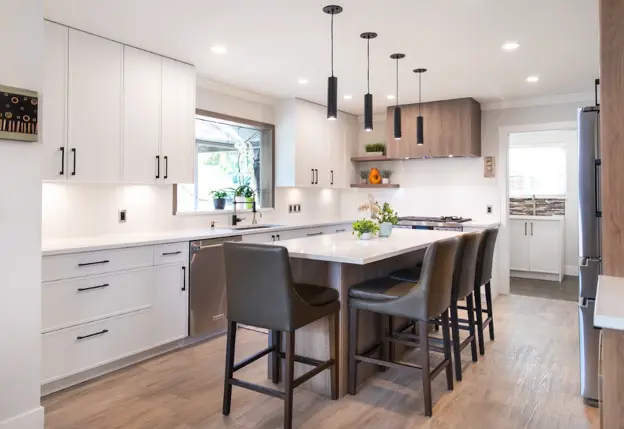
What Stays, What Changes, and What Gets Added?
One of the biggest advantages of a hybrid kitchen renovation is that you can make decisions based on the condition of your kitchen rather than treating everything as one big replacement project.
What Can Stay?
Start with the parts of your kitchen that are still doing their job.
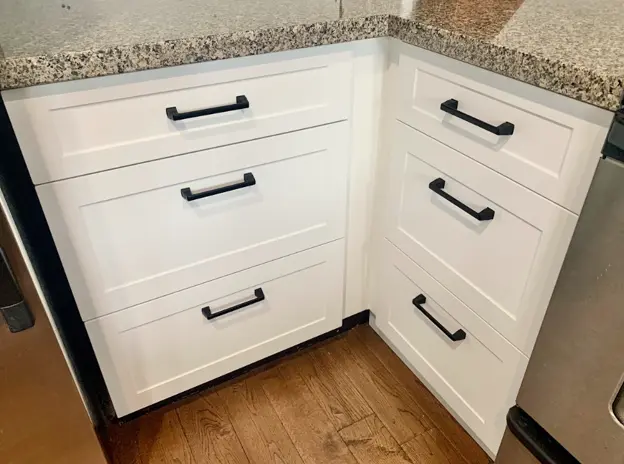
If your cabinet boxes are structurally sound, they may be suitable for [cabinet refacing]. That means keeping the existing boxes while updating the doors, drawer fronts, and visible finishes.
Your kitchen layout might also be worth keeping. If the sink, stove, refrigerator, and work surfaces are already positioned conveniently, changing their locations may add unnecessary work and expense.
Even your flooring or appliances could stay if they’re in good condition and fit the overall design.
What Can Be Updated or Replaced?
This is where the transformation starts to take shape.
New cabinet doors can completely change the appearance of existing cabinetry. Updated countertops and a coordinated backsplash can make the room feel more current, while new hardware and lighting help bring everything together.
You might choose quartz countertops, a simple tile backsplash, and flat-panel cabinet doors for a cleaner, more modern look. Or perhaps you prefer warmer finishes and a more traditional style.
The important thing is to choose updates that work together, rather than making each decision separately.
What Can Be Added?
Sometimes, keeping most of your kitchen doesn’t mean keeping every detail exactly as it is.
Maybe you need a pantry for extra storage, drawers that make pots and pans easier to reach, or a better place for your garbage and recycling bins.
A hybrid kitchen renovation can include new pantry cabinets, drawer conversions, spice racks, and built-in waste and recycling storage. You can also replace selected cabinets or upgrade appliances without rebuilding the entire kitchen.
These practical additions can make a real difference to how your kitchen functions, especially if you’ve been working around the same storage frustrations for years.
That’s what makes a hybrid renovation different from a simple cosmetic refresh. You’re not just changing how the kitchen looks. You’re improving how it works for you.
How Does a Hybrid Kitchen Renovation Work?
A hybrid kitchen renovation starts with understanding what you already have and what you want to improve.
While the exact process varies depending on the project, here are the main steps.
Step 1: Assess Your Existing Kitchen
Start by looking at the condition of your cabinets, countertops, and other existing features.
Which elements are still in good shape? Which ones are damaged, outdated, or no longer practical?
This helps determine what can stay, what should be updated, and whether any new cabinetry or storage is needed.
Step 2: Decide What You Want to Change
Make a list of your priorities.
Perhaps you’re happy with the layout but want more storage. Maybe the cabinets are solid, but the doors and countertops need updating.
Separating the changes you need from the ones you’d simply like to have can help you establish a realistic project scope.
Step 3: Plan the Design and Materials
Once you’ve decided what to keep and replace, it’s time to choose the finishes.
This might include new cabinet doors, countertops, backsplash materials, hardware, and lighting.
If new cabinetry is being added, it should be planned alongside the existing cabinets so the finished kitchen feels coordinated.
Step 4: Coordinate the Installation
The installation sequence depends on the work involved.
Cabinet modifications and new cabinetry may need to be completed before countertops are measured and installed. Backsplash installation typically follows the countertops, while lighting and finishing details are coordinated around the other work.
Planning the sequence helps avoid unnecessary delays or rework.
Step 5: Review the Finished Kitchen
Once the work is complete, check that doors and drawers operate properly, new finishes are installed correctly, and any added storage works as intended.
The result should be a kitchen that looks more current and functions better, while retaining the elements that were worth keeping.
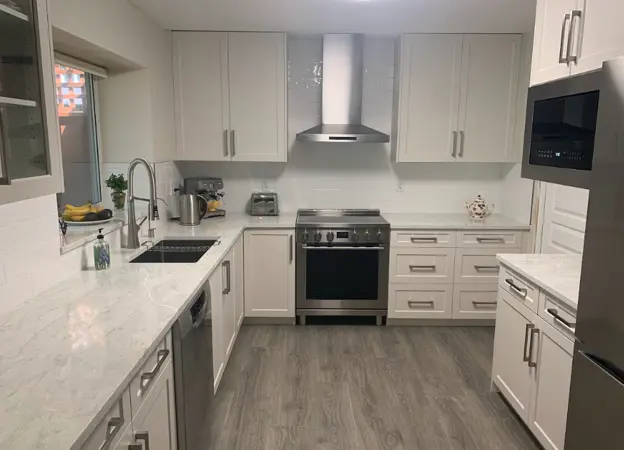
What Could a Hybrid Kitchen Renovation Look Like?
Imagine a kitchen with solid oak cabinet boxes, outdated raised-panel doors, laminate countertops, and limited pantry storage.
The layout works well, and there’s no reason to move the sink or appliances. But the homeowner wants a more modern appearance and a better place to store groceries and small kitchen equipment.
A hybrid renovation could involve:
- Keeping the existing cabinet boxes and refacing them with new doors and drawer fronts.
- Replacing the laminate countertops with quartz.
- Installing a new backsplash and updated cabinet hardware.
- Adding a pantry cabinet that coordinates with the refaced cabinetry.
- Improving the lighting around the main work surfaces.
The result would be a kitchen with a different look and more useful storage, without replacing every cabinet or redesigning the entire layout.
Of course, every kitchen is different. The improvements that make sense will depend on the condition of the existing cabinetry, the available space, and the homeowner’s priorities.
When Does a Hybrid Kitchen Renovation Make Sense?
A hybrid renovation may be a good fit if you like some parts of your kitchen but want to change others.
Here are three things worth checking before deciding.
Are your existing cabinets in good condition?
Look for signs of water damage, warping, or other structural problems. If most of your cabinet boxes are sound, keeping and refacing them could make sense. If only a few are damaged or no longer practical, selective replacement may be an option.
Does the layout work for your daily routine?
Think about how you move between the sink, stove, refrigerator, and countertops. If you’re comfortable with the layout, there’s usually less reason to make major changes.
Are there problems that new finishes won’t solve?
A new cabinet door won’t fix a damaged cabinet box, and a new countertop won’t solve a layout that makes cooking frustrating.
If your kitchen has significant water damage, major structural issues, or a layout that needs extensive changes, a more comprehensive renovation may be the better choice.
The goal isn’t to keep as much as possible at any cost. It’s to keep what makes sense and improve what doesn’t.
How Do You Make a Half-New Kitchen Look Like One Complete Design?
One common concern with a partial kitchen renovation is whether the new and existing elements will look like they belong together.
It’s a fair question. If you replace your cabinet doors but keep countertops that clash with the new colour, the kitchen might still feel unfinished.
The same can happen when you choose a backsplash, hardware, and lighting separately without thinking about the overall design.
The solution is to plan the finished look before starting the work.
Choose cabinet colours, countertop materials, backsplash finishes, and hardware with the entire kitchen in mind, including anything you’re keeping.
If you’re adding new cabinets alongside existing ones, pay particular attention to door styles, finishes, and proportions so the different elements work together.
A successful hybrid renovation shouldn’t leave you wondering which parts are new and which are old. Everything should feel like it belongs in the same kitchen.
How Much Does a Partial Kitchen Renovation Cost?
One reason homeowners consider a partial kitchen renovation is the opportunity to avoid replacing elements that are still in good condition.
Keeping existing cabinet boxes or maintaining the current layout may reduce the amount of demolition, material replacement, and installation work required.
However, the total cost depends on several factors, including:
- The size of your kitchen.
- How much existing cabinetry can be reused.
- Whether you’re adding or modifying cabinets.
- Your choice of countertops, doors, and other finishes.
- Any electrical, plumbing, or repair work required.
A project involving cabinet refacing and new countertops will have a different budget from one that also includes new cabinetry, lighting, and storage improvements.
The timeline varies for the same reasons. Material availability, fabrication, installation requirements, and unexpected repairs can all affect how long the work takes.
Rather than relying on a general estimate, it’s worth getting a project-specific assessment so you understand what the renovation will involve before committing to it.
Can You Complete a Kitchen Renovation in Stages?
Yes, depending on the work involved, some kitchen updates can be completed in phases rather than all at once.
For example, you might start with cabinet refacing and hardware, then update the countertops and backsplash later.
If you’re planning to add cabinets or change the layout, however, it’s important to consider those changes before ordering materials or starting installation. Otherwise, you may end up paying to redo work you’ve already completed.
Even if your budget calls for a phased renovation, try to plan the finished kitchen from the beginning.
That way, each improvement contributes to the same overall design, whether the work happens in one project or over several stages.
Frequently Asked Questions
Is a hybrid kitchen renovation the same as cabinet refacing?
Not exactly. Cabinet refacing focuses on updating existing cabinets by replacing the doors, drawer fronts, and visible finishes while keeping structurally sound cabinet boxes.
A hybrid kitchen renovation can include cabinet refacing along with other improvements, such as new countertops, backsplash materials, lighting, or additional cabinetry.
Can I replace some kitchen cabinets and keep others?
Yes, depending on their condition and how the new cabinets will fit into the existing layout.
For example, you may be able to keep and reface most of your cabinets while replacing a damaged section or adding a pantry cabinet.
The key is making sure the new and existing cabinetry work together in terms of size, door style, and finish.
Can I update my kitchen without changing the layout?
Absolutely. If your current layout works well, you can focus on updating cabinet doors, countertops, backsplash materials, hardware, and lighting without moving the main appliances or plumbing.
This can help limit the scope of the renovation while still giving the kitchen a noticeably different appearance.
Will my kitchen be usable during a partial renovation?
That depends on the work being completed.
Some projects allow homeowners to continue using parts of their kitchen during installation, while others may require temporary access restrictions, particularly when countertops, sinks, or electrical fixtures are being replaced.
Ask your renovation professional what to expect before the work begins so you can plan accordingly.
Is a hybrid kitchen renovation cheaper than a full remodel?
It can be, especially when you’re able to reuse existing cabinet boxes and avoid major layout changes.
However, the savings depend on the materials, amount of new cabinetry, installation work, and any repairs required. A detailed quote is the best way to compare your options.
When is a full kitchen renovation a better choice?
A full renovation may make more sense if your existing cabinets are extensively damaged, the layout no longer works, or you want major structural changes.
If most of your kitchen is still in good condition, a hybrid approach may allow you to achieve your goals with fewer replacements.
Wondering If a Hybrid Renovation Could Work for Your Kitchen? Let’s Talk.
You don’t have to decide what stays and what goes on your own.
At 180 Kitchens, we help homeowners explore practical renovation options based on the condition of their existing kitchen, their priorities, and their budget.
Whether you’re considering cabinet refacing, new cabinetry, or a combination of updates, our team can help you understand which approach makes sense for your space.
We offer cabinet refacing and kitchen renovation services in Vancouver, Calgary, and Edmonton, helping homeowners make the most of what they already have.
Book a free in-home consultation or get a free estimate online.